RV Campgrounds have raised their rates to the financial breaking point for many RV travelers
I’ve been an RV traveler, “on the road” since 2011. When I started, you could pull into many (most?) campgrounds, drop $20 or $30 for the night and receive full hookups and a safe place to stay. Weekly rates were nearly always under $200.
Safety FIRST
I always preferred RV parks to overnights at Walmarts. Walmart parking lots are often “crime central” for their local community. Highway rest stops and truck stops next to highway exit ramps are safer, but there’s a lot of activity and the tractor trailers tend to leave their vehicles running all night. So, an inexpensive campground was (for me at least) the way to go.
Fast forward to today. In my recent travels where I stayed nightly or weekly, I had to do some digging to find places to stay with full hookups that were less than $50. per night. A great tool to find campgrounds (of all types) is Allstays. Fortunately, thanks to this wonderful economy, there was almost always space – even without making reservations.
More and more RV Parks – RV Campgrounds are charging well over $50 per night
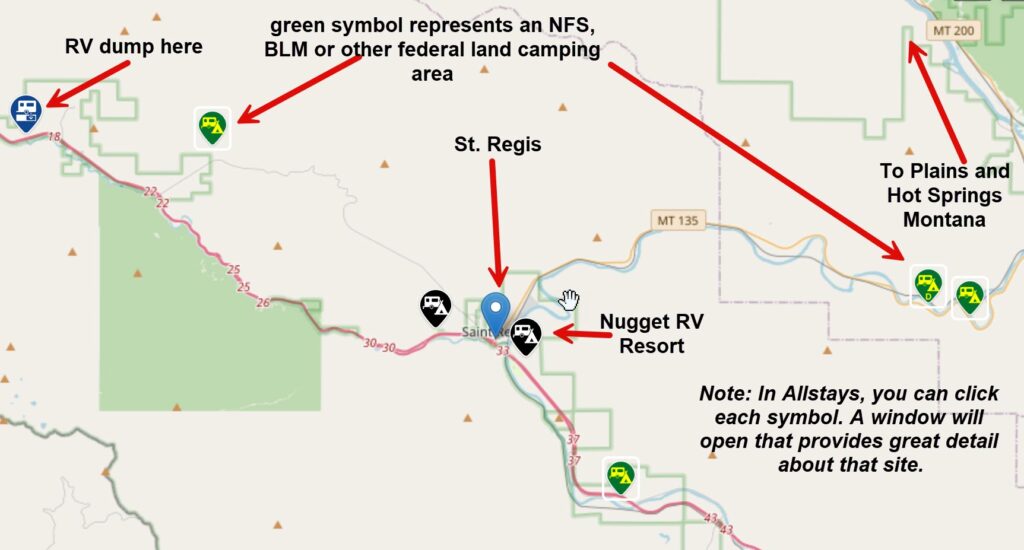
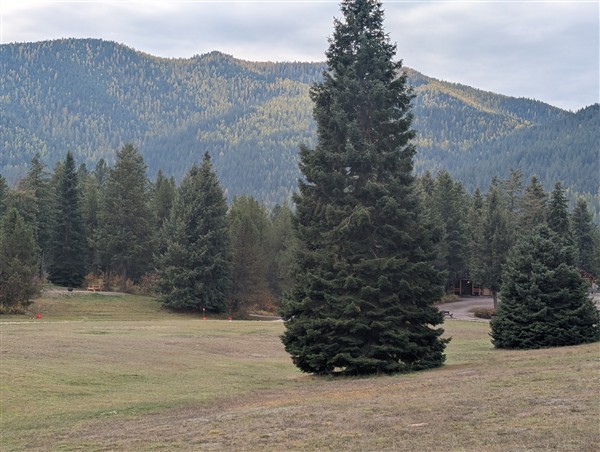
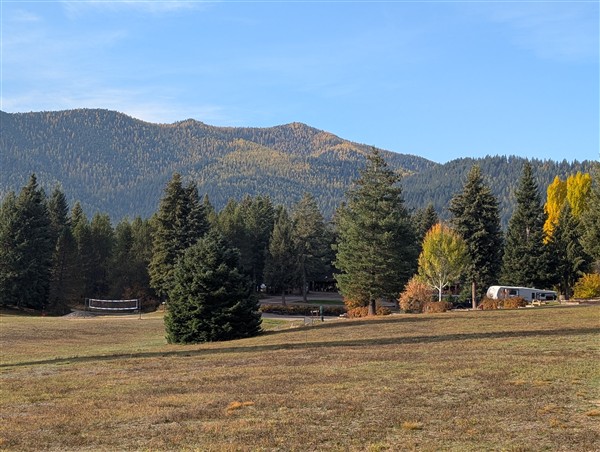
As I headed towards North Idaho this autumn, I recently stayed in St. Regis, Montana. The premium campground (and ONLY open campground in October) is The Nugget RV Resort. Many RV parks call themselves resorts, I’d say in all honesty, the Nugget IS a resort. BUT… even though it was late October, and the owner discounted my rate, I still paid OVER $400. for the week!
This kind of expense is NOT sustainable for MOST RV’ers – PERIOD. I therefore choose – when feasible – to vote with my feet, or more appropriately my wheels! Except in rare occasions, I will NOT pay these kinds of fees.
There ARE alternatives to overpriced private RV parks
For Cost Savings Tips for RV campers lets start here…
RV Camping Cost Saving Tip: Most RV parks have rates for overnight, weekly, and monthly stays. Monthly rates are a fraction (per night) of the daily rate. Monthly stays also are often exempt from lodging taxes typically paid for daily and weekly stays. Weekly stays do receive (typically) a 10-15% discount when compared to the daily rate. Naturally, I gravitate towards monthly stays.
Be aware: IF you become a “monthly” at an RV park, while you won’t pay taxes, you are often billed for your electric usage. Daily and weekly rates typically include the electric you use. IF you’re going to stay monthly, ASK what their rate includes and listen to their response carefully!
RV Park Memberships that can get you discounts for short term stays
Passport America is a large 50% discount program that I’ve become a lifetime member with. Membership is still less than $50. per year. Tip: When you search parks in their network, read the terms for when and how long the 50% discount applies.
Harvest Hosts is another very large program. It started by offering stays at wineries, but has expanded to much more. Harvest Hosts has absorbed Boondockers Welcome – a similar program I’ve been a member of for years. I do know that they have holiday specials available HERE.
Costs for each program are moderate, so even with light use, you’ll save some $$.
Here’s what I learned about Medicare as an RV traveler (and the choices I made)…
When you enroll in Medicare, you have several important choices to make. In the event you need (at some point in the future) significant (and EXPENSIVE) medical treatment, what you do when you first enroll can make the difference between financial stability and true hardship. I wrote this article to share what I learned. It is as valid today as the day I did my research.
The Nugget RV Resort and the VERY affordable alternative
As I inferred earlier, The Nugget is an outstanding RV park. It is set in a beautiful, natural setting. That is, it is NOT a giant gravel lot with RV spaces lined up one by one. In fact, the sites actually have character! The park is broken into sections, and even where the sites are ‘lined up’, each has its own ‘personality.’ IF there is an RV park worth $400. for a week’s stay, it’s this one.
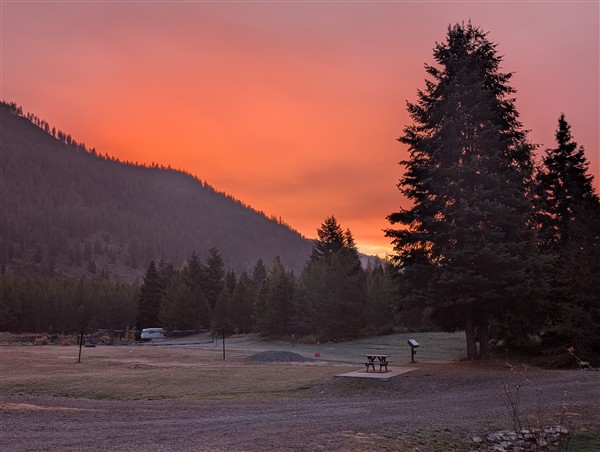
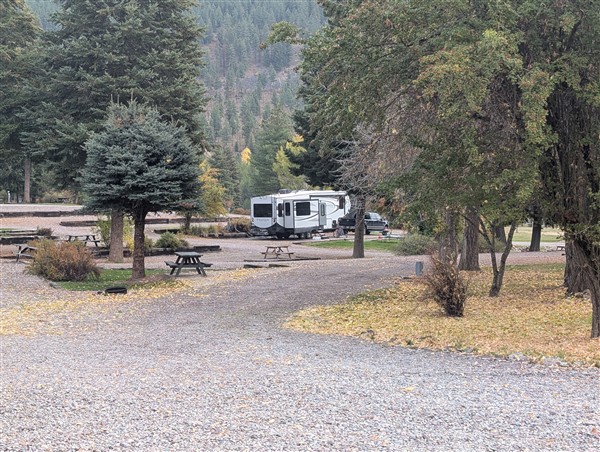
There was space to move around and they even have their own hiking trails, community center, coffee shop, and summer only pool.
My goal here is NOT to promote this RV park. Frankly, they do plenty of their own promotion. In fact, I’m currently being “chased” by YouTube retargeting ads for the Nugget! My point is this: As wonderful as this park is, I only stayed here because other parks in the area were closed and it was too late (and stormy) to comfortably boondock (dry camp.)
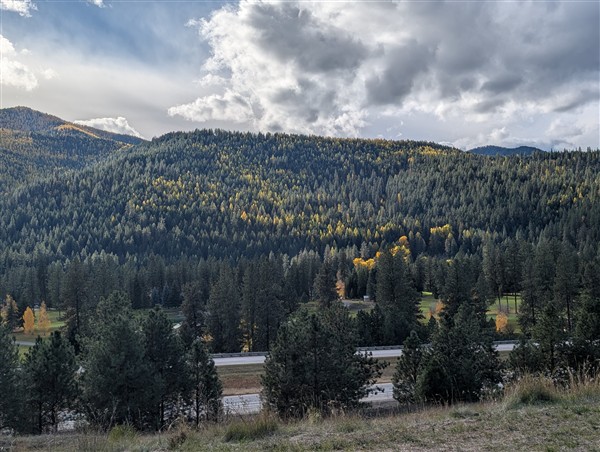
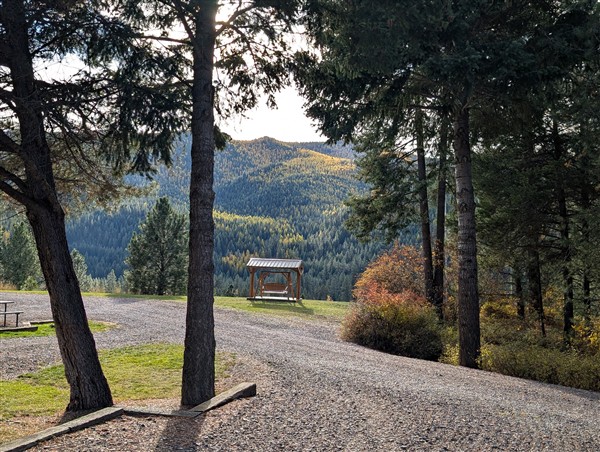
Boondocking: Self-Contained Camping is the affordable alternative
As more and more RV Parks raise their prices to infinity, I believe the only real solution is to dry camp (boondock) where legally allowed. When you boondock, you’ll find lots of open space, no need to reserve months in advance (typically), and “million dollar surroundings” to select from!
There are numerous options across the nation. Many, though not all are operated and maintained by Federal agencies. These include National Forest Service (NFS) lands, Bureau of Land Management (BLM), Bureau of Reclamation, and Bureau of Indian Affairs. Again, all are accessible via the Allstays interface.
Overnight rates rarely exceed $20. and many areas are free. Most allow stays of up to about 2 weeks. As an America the Beautiful Senior Pass holder, all federal camping areas are half price. Incidentally, there are numerous benefits to this lifetime pass.
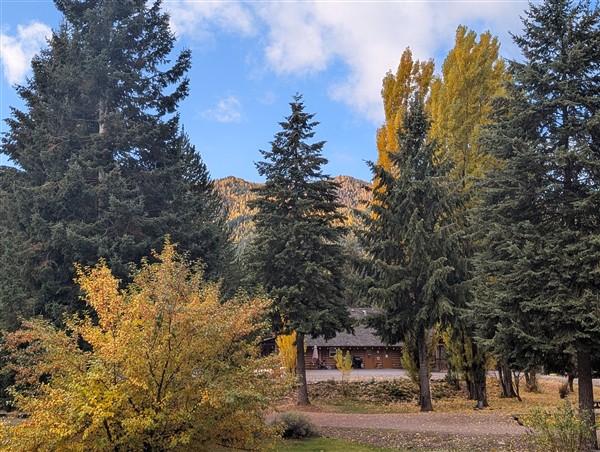
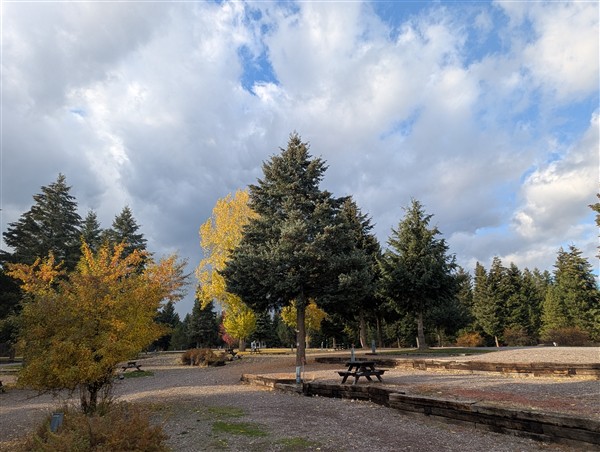
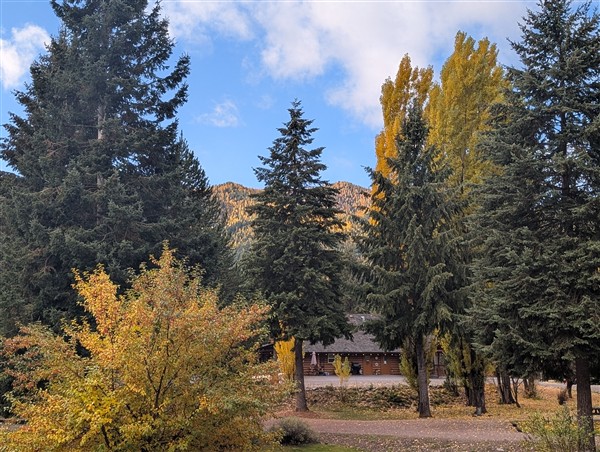
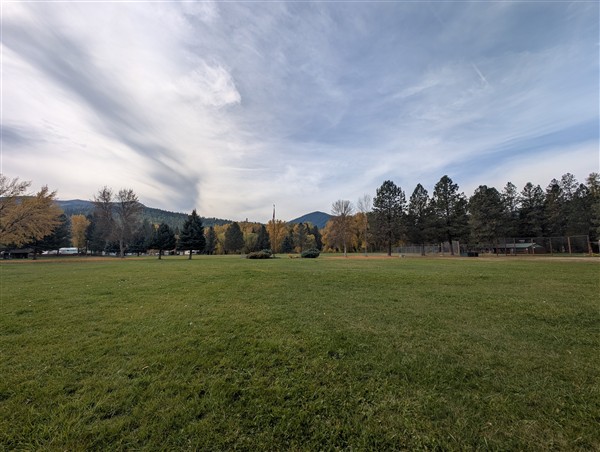
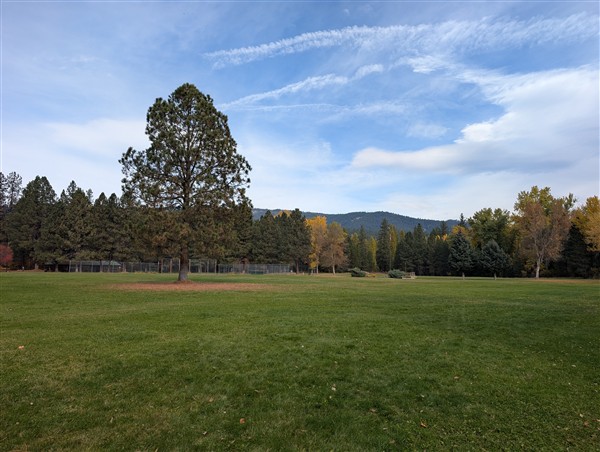
Most of these campsites and dispersed camping areas are primitive. That is, no water, sewer or electric hookups. IF you’re properly equipped, you CAN boondock (dry camp) for extended periods of time and enjoy the experience. IF you choose to camp in these areas, you’ll be rewarded with a natural setting, open space and the joy of discovering natural features like hot springs, hiking trails and more in that region.
Dry Camping Requires Advance Preparation In order to ENJOY the experience
I have written numerous posts over the years detailing my “off grid camping” setup. My most recent post on this topic details most of the equipment you’ll need in order to have a successful and enjoyable experience for an extended stay “off-grid.” To encapsulate and provide you with my latest recommendations, here’s what you’ll need:
- Solar panels – the current “industry standard” for portable solar panels is 400 watts, I have personally had great success with Renogy and their products. (Note: When you land on the page I’m linking you to, look for the 400 watt solar blanket & the 400 watt solar suitcase.
- Solar controller – this is the “brain” that interfaces (connects) the panels to your camper’s HOUSE batteries. Renogy has a 30A MPPT type available for just $150. (at the time I’m preparing this post.)
- Inverter – converts 12 volts DC to 110v AC current (runs SOME of your AC appliances off your house batteries.) I continue to recommend Renogy inverters. This link takes you to all the inverters they offer. I recommend at a minimum the 2000 watt inverter, but the 3000 watt is (in my view) a ‘best value.”
- Generator – a short term (or longer term) solution to providing 110v AC. This Champion dual fuel generator has proven to be RELIABLE, DURABLE and a BEST VALUE. It alone will serve to power up your batteries and run some “light duty” equipment (laptop, cell charger, TV.) Want more? Buy TWO and get the parallel kit (look on the Amazon page, its there for about $60.) This makes TWO generators and a parallel kit just over $1000. It will provide you with the equivalent of 30 amp service to your camper. One last thought – these generators are fuel efficient. About a gallon of 91 octane gas will last upwards of 6 hours. And, yes, with two generators, you CAN run an air conditioner.
Connectivity – a major issue in our modern world
Connectivity is one thing that has made an “on the road” life possible. I can be virtually anywhere and still serve as an RV Buying Consultant through my Concierge RV Buying and Selling Service. I can also prepare posts like this one, and even watch TV via Pluto.com!
Methods for connecting include:
- Verizon Hot Spot – varies according to what plan you have
- Cricket Hot Spot – 100 gb for $55.
- T-mobile Hot Spot – 100 gb for $50
- Starlink – unlimited for $165.
Of these four, I still use the top two. Between Verizon and AT&T (Cricket), I have a signal almost anywhere. One thing I DO employ is the use of a Cell Signal Booster. I have been using the HiBoost for over 4 years now and it is still going strong. So, I can confidently state it has stood the test of time! This cell booster does what it advertises to do – IF your phone has any signal at all, it will amplify that signal. In extreme cases, I’ve seen my phone go from 1 to 4 bars when I activate the booster.
Starlink is becoming a very viable alternative, but you’ll need about $350. in equipment (current price including shipping and tax), then $165. per month for the service. The clear advantage of Starlink over my approach is the ability to access the Internet in even the most remote locations.
Do you have the right camper to boondock?
What makes a camper good for boondocking? In my view, it comes down to three attributes: sufficient size holding tanks (particularly fresh water), cabinetry that is SECURELY affixed to the walls, and a suspension designed for off-road travel. This may (and probably should) include shock absorbers on each axle. It’s one of the design features that attracted me to my Outdoors RV 5th wheel.
In my travels, I’ve encountered many of the best camping areas require travel (sometimes several miles) across gravel or dirt roads that are often wash-boarded and/or replete with potholes! IF you’d like to have your camper arrive unscathed, I suggest finding one that is built with these attributes.
One of the reasons I suggest Outdoors RV trailers to my clients who are looking for a towable is they fulfill all of the above stated attributes. As you do your research, or should you engage my services as an RV Consultant to purchase an RV, you’ll find that few other manufacturers do as much – or as well.
Yes, I do serve as an RV Consultant for my Concierge RV Clients
This works for buyers who want guidance and a professional who “has their back” when searching for the right camper at the best possible price – and for sellers who want their current camper gone and want to avoid the pitfalls associated with selling a camper. Check my Concierge RV page to learn more.
Dry Camping Concerns – are they real?
I’ve heard, particularly from solo travelers they feel unsafe being in an isolated, wilderness area alone. Certainly, there’s the possibility of trouble coming to your doorstep, however, if you are boondocking “off the beaten path”, you’re not where trouble is likely to occur. In my years on the road (knock wood), I’ve never had even a questionable experience, let alone while dry camping “off grid.”
The BIG RV Camping Pay-off
If you have the right camper and it is properly equipped, you’ll find you can boondock (literally) for weeks – and at a minimal cost. You’ll be camping in nature, perhaps lakefront if that’s where YOU want to be. You will pay next to nothing ($150. or less) for a week of RV Camping – or perhaps absolutely nothing. You’ll have OPEN SPACE rather than have to wonder if I extend my awning will it hit my neighbors slide-out! In other words, you’ll be experiencing RV camping (in my humble opinion) as it was INTENDED to be!
Pinedale, Wyoming – Boondocking Paradise?
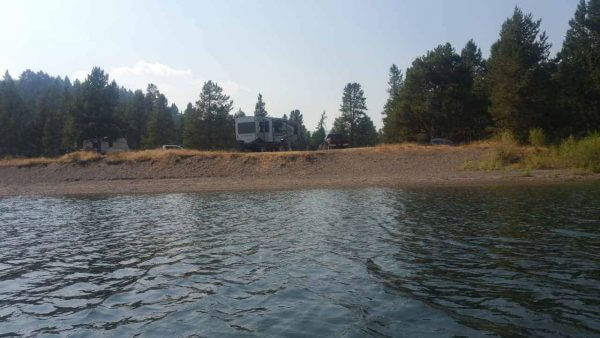
As an example, I like the Pinedale, Wyoming region. The lakes just outside of Pinedale, especially Soda Lake and Willow Lake have lakefront dispersed camping areas with NO fee for up to about 2 weeks of RV camping! Further, these campgrounds are close enough to Pinedale to take advantage of all it has to offer.
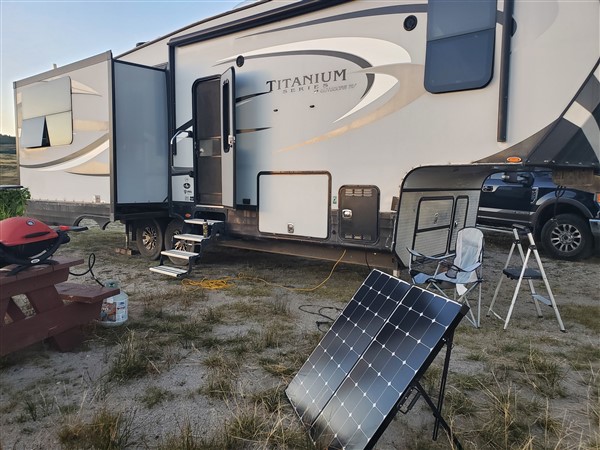
One MAJOR feature in Pinedale I enjoy and rely upon is the Pinedale Aquatic Center. It has pools, water walking streams, a gym and workout facility – and showers! All available for a day pass or monthly membership. My camper has an 80 gallon water tank, but knowing I can shower at the “PAC”, certainly helps minimize my water usage at the campsite.
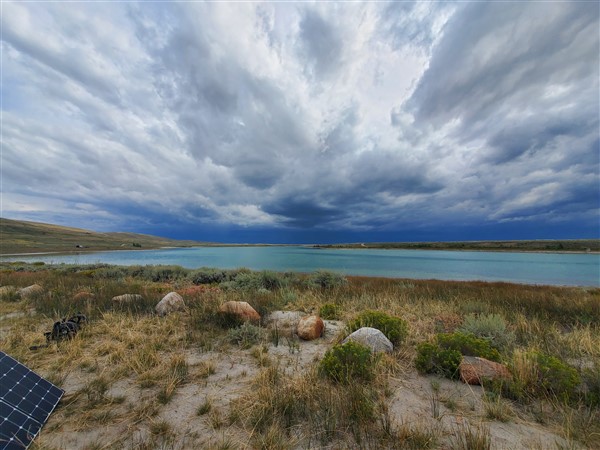
In my travels, I’ve found numerous camping areas with similar facilities in the region. Cascade and Donnelly Idaho offer something similar to what Pinedale does. I’m sure as you search (perhaps using Allstays), you’ll find some favorites of your own! In the Donnelly area, the last time I camped there, the fee for waterfront sites was $10 per night.
Closing Thoughts on reducing RV Travel Expenses – and a quick study of the West Yellowstone
West Yellowstone, western gate to Yellowstone National Park is perhaps the pinnacle of over-priced, crowded, low quality experience RV camping!
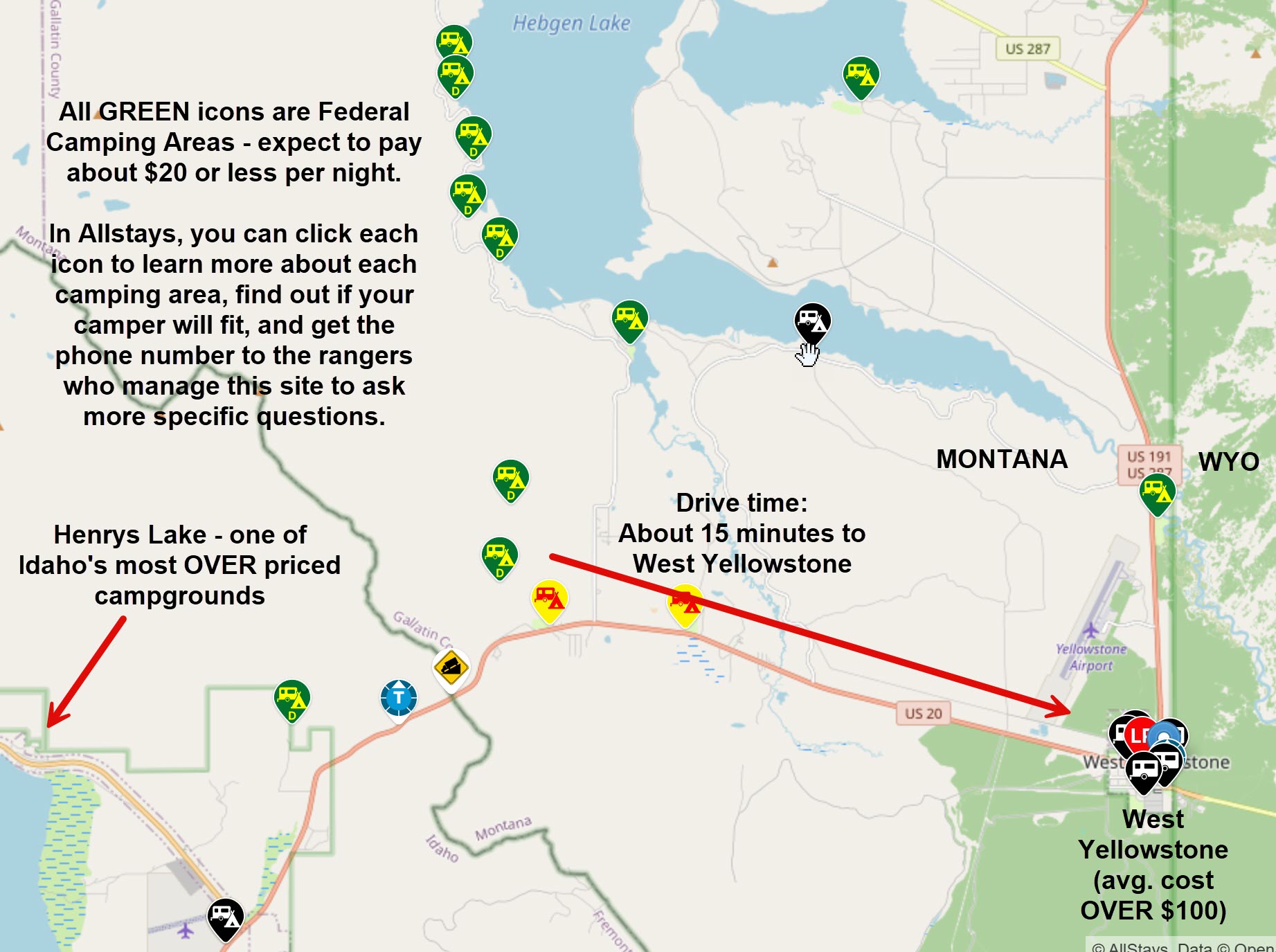
I recently conducted a quick study of camping rates within the tourist trap known as West Yellowstone. Most of the RV parks charge near or over $100 per night (in season), and one is now knocking on $200 nightly! Really?!
What if you could camp in open spaces, in a natural environment for about $20. or less per night within about 15 MINUTES of West Yellowstone?
Study the Allstays map below – and if you subscribe to Allstays you’ll gain access to the database to start researching each of the NUMEROUS Federal camping areas within MINUTES of the West Yellowstone entrance. The ONE catch? Most of these campsites offer no hookups, so you’ll need to boondock – but after reading this post AND taking action, you’ll be ready!
If you found this information to be of value, please leave a comment below, consider clicking on the YouTube video above – then give it a thumbs up, leave a comment, and share. It helps to improve the video’s “visibility” as YouTube will recommend it to others. THANK YOU!
Last Thoughts…
As we head into winter, I’ll share more about where I am and what I’m learning about the Silver Valley. Hint… so far I like it! More to come (including ski stories)…
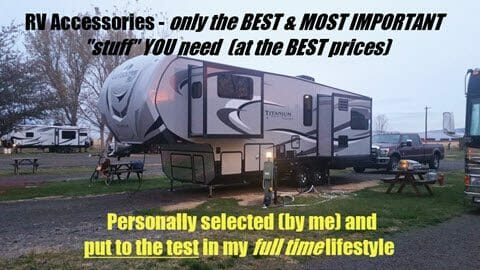
Need “tried and true” RV Accessories? My personal recommendations…
Want to be notified of future posts as they arrive? Sign up for my free newsletter to be notified of upcoming posts.












I talked with you about my 2nd Outdoors RV purchase-went from my 2016 28RKS to a 2025 24 RKS. In Alaska, we do not have a Brinkley dealership. I would consider a Brinkley if available in Alaska. What if your feeling about the Brinkley and Outdoors RV?
John,
I’d still take an ORV over a brinkley any day of the week. I’ve looked over their 5th wheels carefully – there are glaring issues in their design – but they’re pretty which makes me wonder whether its a “set up” – build a company, get it off the ground and sell it off to one of the whores like Thor or Forest River.
Al
Inflation everywhere. Great info and enjoy seeing your travels. Thank you
Thanks Ron, and yes, inflation is everywhere – and it will get worse as the dollar collapses. Al