Clark Canyon Reservoir – a truly historic location
Clark Canyon Reservoir is my first real camping location after leaving the Idaho Falls region. Be sure to check out my post about Jefferson County Lake if you want to get the inside scoop on some great stuff in and around Idaho Falls. Clark Canyon Reservoir is an agricultural water body situated in Southwestern Montana. It serves local farmers and ranchers with a reliable water source in this arid region known for less than 12 inches of precipitation annually. It is also a great site for camping and recreation. Both motor boats and non-motorized watercraft are welcome in this water body.


The reservoir is a relatively recent feature in this region. Construction began in 1961. Shortly after the town of Armstead was literally closed in 1962. It had residents living there at the time! Armstead is located at the base of the reservoir that has now flooded this valley! Armstead had existed since about 1900. Named after a miner, Harry Armstead, the town was a stop along the Union Pacific Railroad that ran from Idaho Falls (about 100 miles south) to Butte (about 85 miles north.) When the water levels are low enough, you can even see evidence of the town!
Clark Canyon Reservoir is also where Lewis and Clark camped in 1805. It was known as Camp Fortunate. While there they met and negotiated with the Limhi Shoshoni Tribe. Sacagawea was reunited with her people here as well.
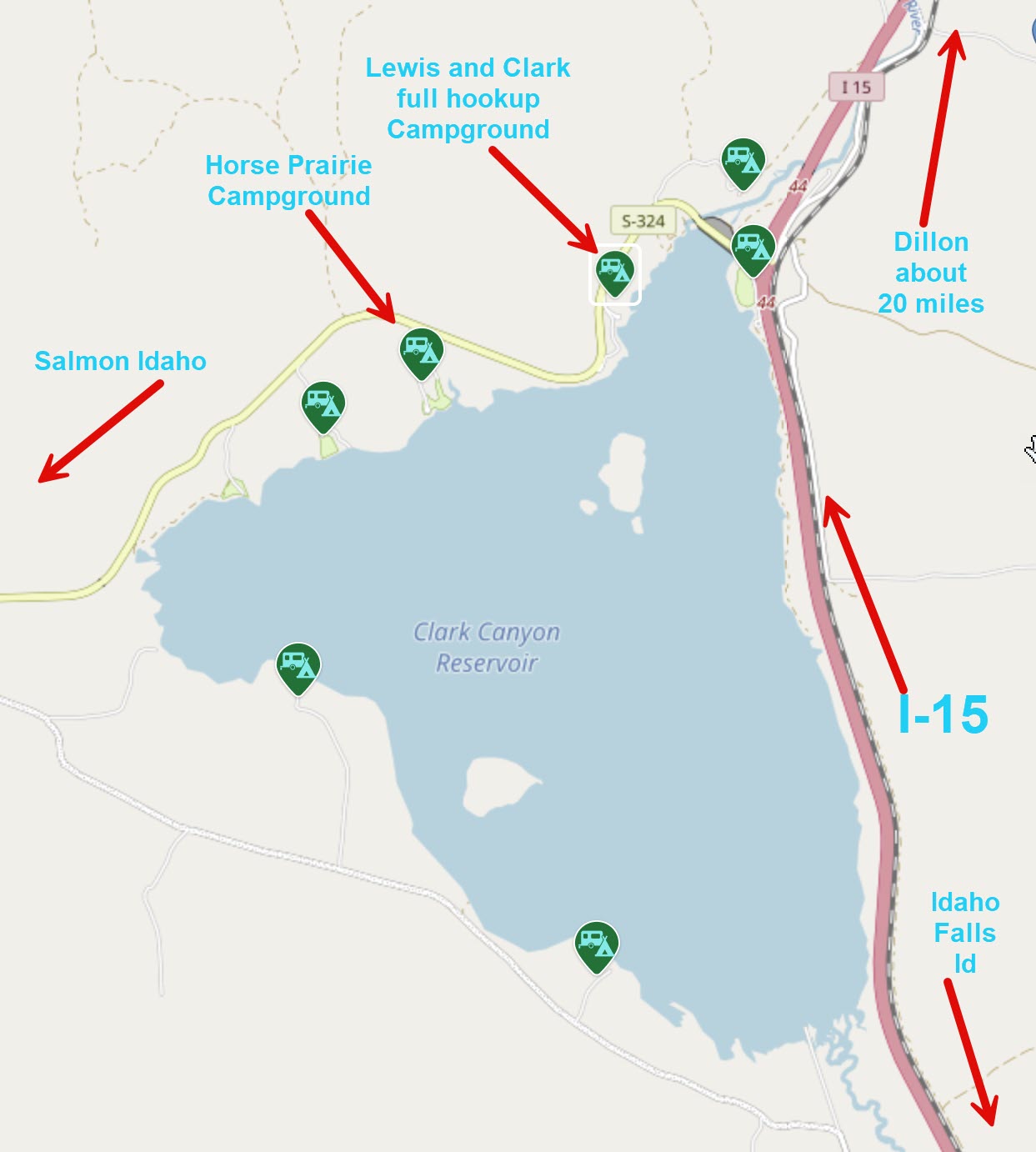
Today the region surrounding the reservoir offers several free, dry campgrounds and one full hookup campground.
Dry Camping in a not-so-remote remote region with a few unexpected experiences

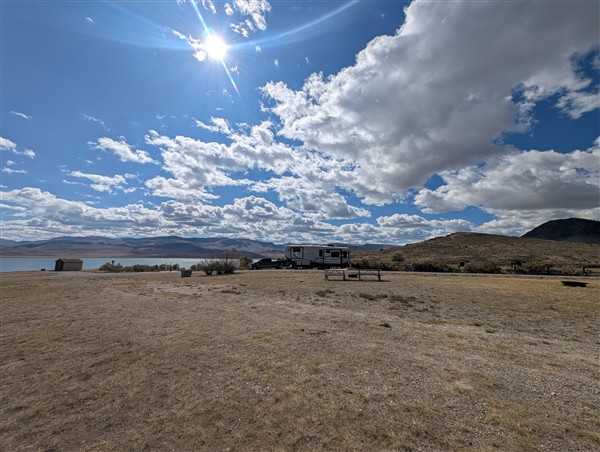
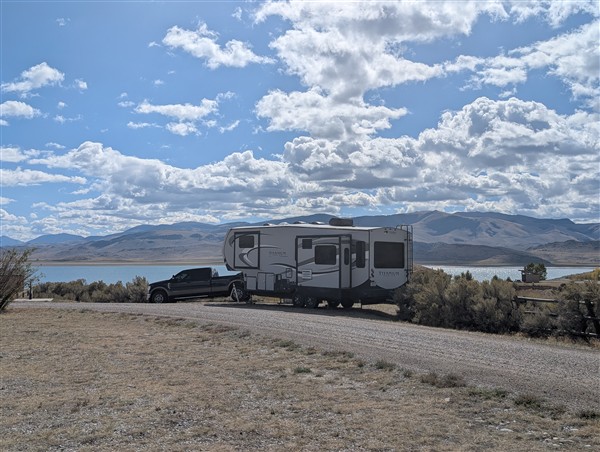
Free camping always sounds good to me, so off to the “Horse Prairie” campground I went! My first goal was to select a campsite. There were plenty to select from, however finding flat land here can be a challenge. This led to my first test of the week…
EVERY RV journey includes unexpected experiences. Mine started with selecting a campsite that proved to be a questionable choice on my part. I wanted to get the camper onto a flat surface, but that required the truck be on a somewhat steep slope to position it. Long story short… it worked out (for the most part.) And a body shop (for my truck) will fix the rest!
Power and Water – the Lifeblood of extended Dry Camping

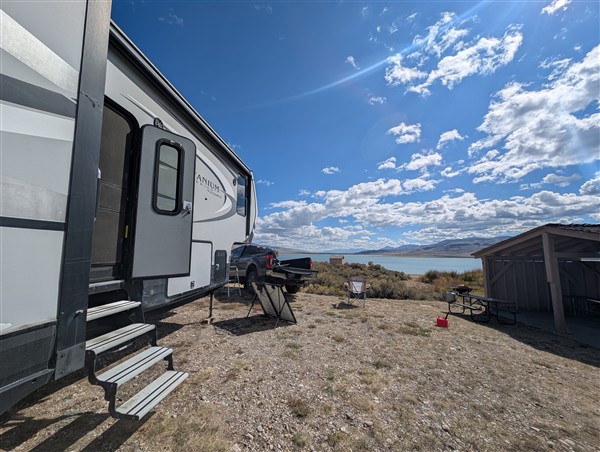
Since I arrived on the first day of Autumn, I was a bit apprehensive about whether my 200 watt portable solar panels would gather enough power to serve me and my camper. My power needs were quite modest. The laptop needed to be fed; the aerogarden lights (30 watts each) served my growing indoor garden, and at night, when temperatures really dropped, periodic runs of the furnace kept temperatures from dropping too low.
On my arrival day, I employed my 200 watt Renogy solar panels at about 1pm (sunset was after 7pm), but with variable clouds, they only collected about 23 amp-hours of energy. I was apprehensive, but every subsequent day featured brilliant, unobstructed sunshine, so I was able to collect about 100 amp-hours each day. This despite being Autumn AND at the 45th Parallel!
To serve my Aero Gardens and laptop, I employed my Bestek 1500 watt inverter. I connect it directly to my batteries and then run an extension cord into my camper.
While this equipment has served me well, it is now “dated.” If I were to purchase new solar panels and an inverter at this time, I would still choose Renogy products. Here are two suggestions: 400 watt solar suitcase OR 400 watt solar blanket.
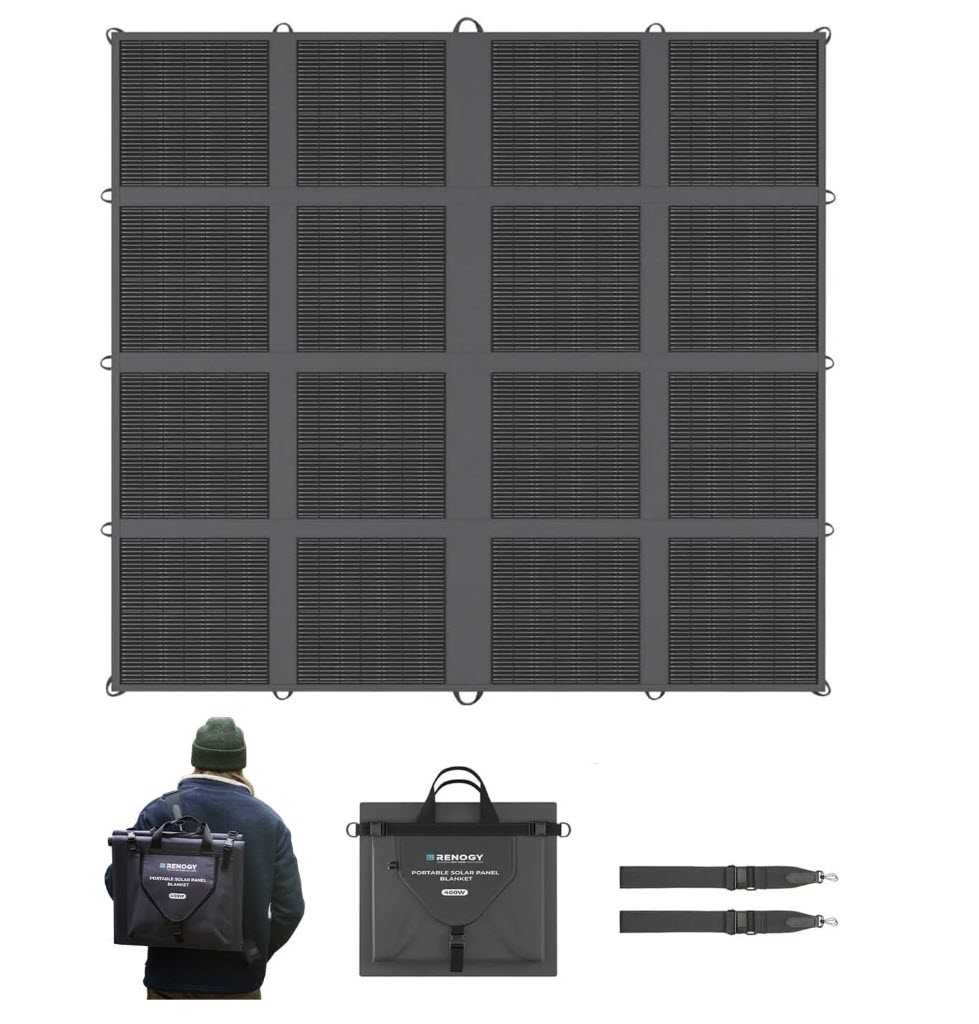
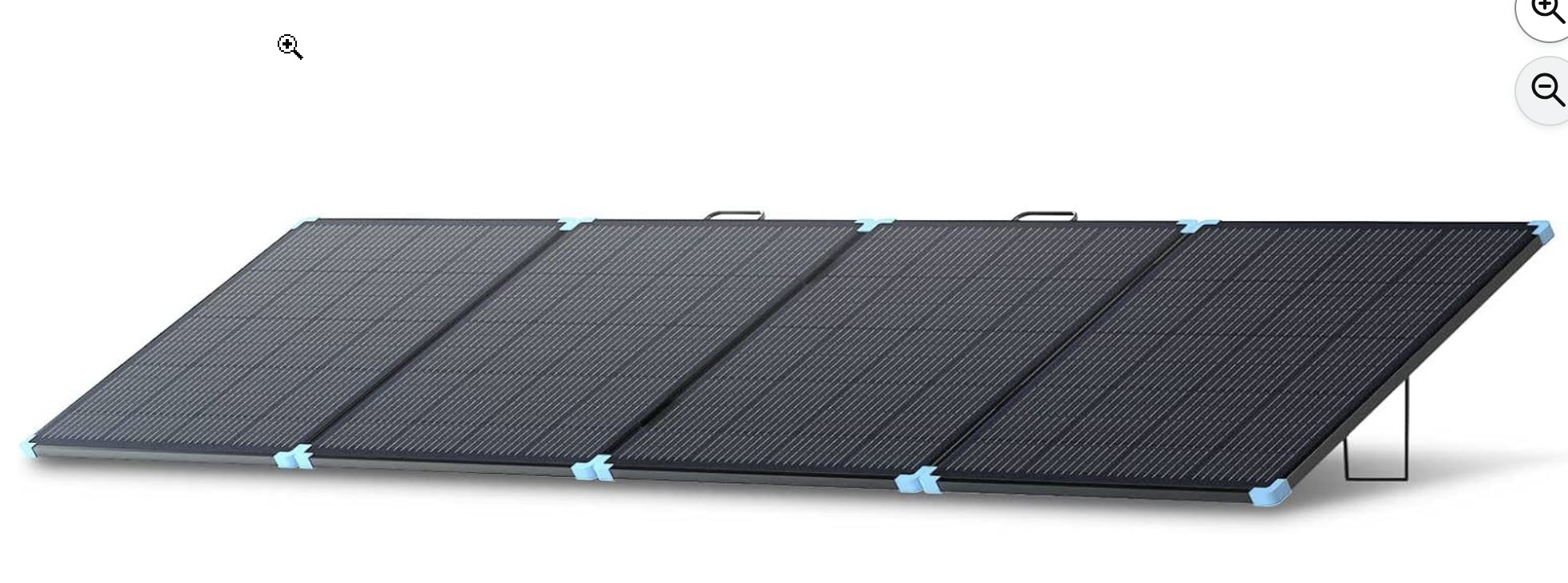
Both offer twice the wattage I currently have for about the same money I paid! I’m including the fact that you will need to purchase a solar controller as these panels no longer include one. Renogy of course makes one, I included an image below. Even with the cost of the solar controller added in, it’s still less than I paid over 7 years ago for my current panels. The solar controller acts to regulate the voltage going into your campers batteries.

WHEN, not IF I replace my current panels, I will probably go with the solar blanket. It is LIGHTWEIGHT (16 pounds) and folds up to take up virtually zero space! I do however like the stand included with the suitcase model, but when it folds, it still has substantial width and height (though it’s depth is less than 2 inches.)
Note: Your panels will NOT serve you or your camper if you don’t get a solar controller!
Lastly, you’re going to need an INVERTER. The inverter connects to your batteries and offers 15A (regular) home current outlets to then power your camper OR specific equipment as detailed in this report in my case. The inverter I’m going to recommend is also a Renogy. The terminals (positive and negative) on the D.C. end are well separated, making the chance of creating a short near zero! I’m suggesting a 3000 watt model which should be more than sufficient for virtually any boondocking need.
As to water, it comes from a decision to purchase a camper that has an 80 gallon fresh water tank. More than enough for me to be in the “outback” for a week or so! This along with other considerations is part of my conversation I hold with clients who are working with me to purchase a camper via my Concierge RV Buying (and Selling) Service.
The Clark Canyon Reservoir Experience – A Brief Video Essay
A warning about SNAKES
Specifically, rattlesnakes. Rattlers are present throughout much of the intermountain west, although, I’ve personally never seen one. According to a maintenance guy at Clark Canyon, their numbers have significantly increased this year over prior years. He shared that one camper’s dog was bit and others have seen them in campsites! I was careful every time I stepped out of my camper, however, I did not encounter one.
Somewhat unusual weather
I was there from Sept. 22 – 28 – I arrived just about as Autumn began. Literally within minutes of the Autumnal Equinox. Outside of my first day where afternoon temperatures struggled to reach 60 and the first night saw my first frost, daytime highs each day were near 80 and overnight lows in the mid-30’s. There was a RAPID warm-up within 2-3 hours of the increasingly later sunrise.


Normal temperatures for this time of year would see a daytime high closer to 70 and overnight lows in the mid-30’s. So the overnights were “spot-on” but the daytime highs were about 10 degrees above normal. There was no precipitation all week and the wind remained “in check” with most days seeing at most 10-15 mph winds.
I have since moved on from Clark Canyon. As I write this on October 2, I’m in Anaconda. The entire region (including Clark Canyon) has cooled off. Daytime highs are now in the 60’s. Frost is likely this upcoming weekend – and it MIGHT snow!
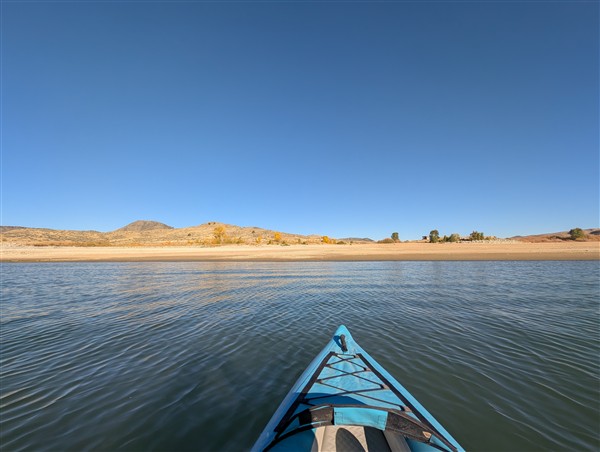

Numerous Handicapped Campsites
During my stay I learned that a handicap marker on a shelter/campsite is only a “suggestion” that IF a handicapped camper were to come to the campground, an able bodied camper should move if asked. It is NOT like parking in a handicap spot at a store where a fine is the penalty. Of course, in my case, I was there for a week and hardly saw any other campers at the Horse Prairie Campground. Incidentally, the Bureau of Reclamation manages the Clark Canyon Reservoir campgrounds.


No Camping Fee, 14 day stay limit, minimal services
The Bureau of Reclamation DOES provide shelters to many of their campsites. Picnic tables are provided at virtually all campsites, along with metal firepits. Each campground has one water hydrant. By the time I arrived, the water had been shut off for the season. Of course, having an Outdoors RV Glacier Peak fifth wheel camper with an 80 gallon fresh water tank, I had no concerns! Incidentally, Outdoors RV is one of my top recommended RV manufacturers for my Concierge RV Clients. My goal is to find the right camper for my clients at the best possible price. Recently, I’ve negotiated some exceptional deals for my clients!

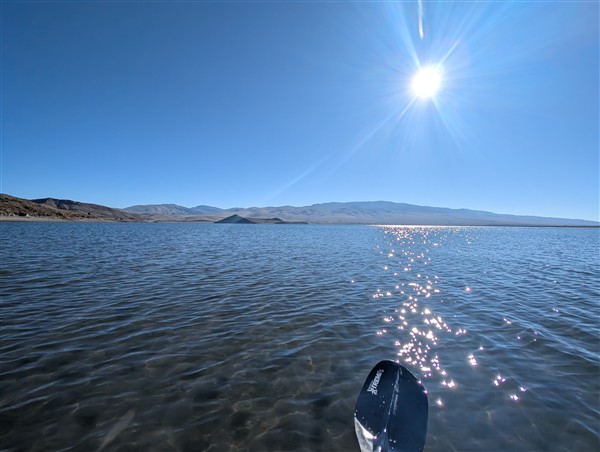
Yes, Clark Canyon is “not so remote”
While most (though not all) of Clark Canyon Reservoirs campgrounds are “dry camping” (boondocking) only, I would not describe them as “remote.” Most of the campgrounds around Clark Canyon are no more than 15 minutes from I-15. Further, due to the open landscape, the Interstate is within view of the campgrounds. It is far enough however that you can not hear the highway noise.
One advantage (well at least for me) of being close to the Interstate is the cell service is good. Both AT&T and Verizon had excellent service at the campsite AND on the water.
Another advantage of Clark Canyon’s campgrounds is proximity to Dillon, Montana.
Lastly, I mentioned that ONE campground has more services. Lewis and Clark Campground at Clark Canyon offers full hookups for $30. per night. Rate may be reduced for America the Beautiful pass holders.
Dillon Montana
A town of 10,000 residents that offers everything you’d expect. Dillon is only about 20 minutes from Clark Canyon. A few highlights in Dillon include:
- A YMCA with full size pool and workout facilities (day fee $8.)
- Several good coffee shops (watch for closing times!)
- An excellent grocery store called Town & Country
- An excellent full service restaurant: Sparky’s Garage
- Lots of other businesses and services including hardware stores, auto repair, etc.
Oh and… It really DID snow! October 5th in Anaconda
Upcoming Travels… Continuing my Northward “drift”
Again, I’m writing from Anaconda, Mt. I will be here until October 13th. Basically, I have one month to complete what will amount to a 3.5 hour drive! So, I will be taking it easy as I work my way through western Montana. Once I cross the border into Idaho, I will be (for a change) in Pacific time. Yes, Northern Idaho is on Pacific time. Since I plan to spend the winter there, that will take some getting used to – especially when fielding and returning calls to my Concierge RV Clients.
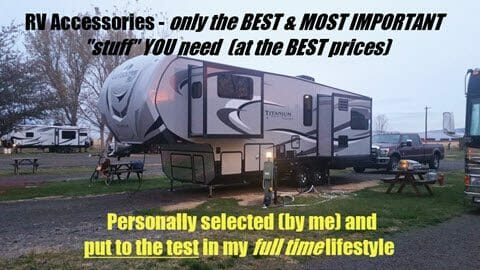
Still RV Travelin’? Need “tried and true” RV Accessories?
Like my content? Please leave a comment below and sign up for my free newsletter to be notified of upcoming posts.