Do you live in an RV camper? Are YOU prepared for a power outage? Some important steps to be ready…
I’m starting this post on November 20th (2026.) The Simpsons have told us the power is expected to go out sometime today. For a cartoon TV show, they DO have a pretty good record of making predictions that have come to pass. I’ll leave it to you to search Google and YouTube to learn about their track record. (I believe this came from “It’s a Blunderful Life”, Simpsons Season 35, Episode 7)
Regardless of whether Lisa Simpson is right or not, at some point the power WILL go out. It may be for a short or a longer period. When it happens, you often won’t know until it comes back on.
My question is this: If you’re living in an RV Camper and the power goes out, are you READY and will you be ok?
We RV’ers have certain ADVANTAGES over those living in a traditional home when it comes to power outages. We have (somewhat) potable water in our fresh water tank. Even if you’re connected to water, sewer and electric, your camper has a freshwater tank. Most are 40 gallons or larger. Keep it full or nearly so even though you’re currently relying upon “city water.”
If city water becomes unavailable, you’ll at least have a buffer with your freshwater tank. You can always supplement with additional water jugs. Water filtration is also important! I wrote an article on this topic and stand by my recommendations in that post.
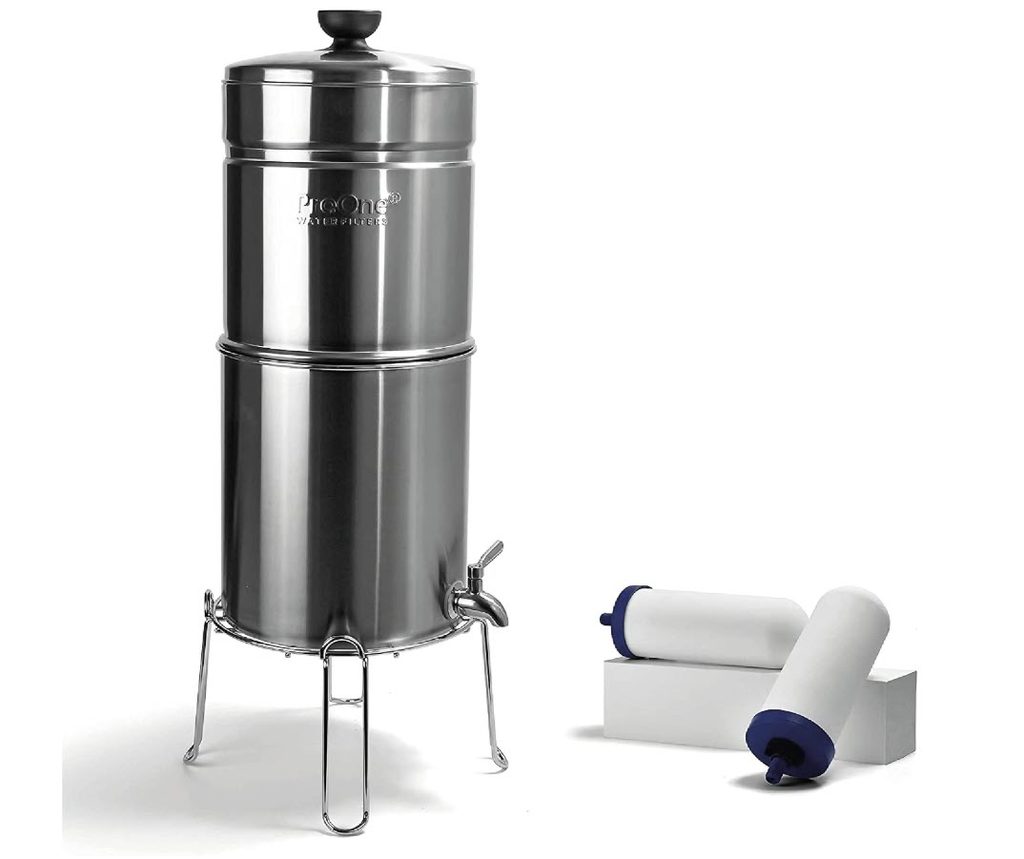
A good water filter should also enable you to take water from rivers, ponds and even puddles and prepare it for safe consumption. As you inevitably know, we can not go long without water!
Lastly, your fresh water tank requires energy to serve you the water you’re storing. Why? The water pump runs off the 12 volt system. Fortunately, your camper has an “energy storage system” – more on this next.
The Essentials to maintain in a Power Outage
In addition to potable water, I’d place refrigeration and heat as VERY high on the list of priorities. The “common denominator” between both is they require energy. As an RV’er, your camper has batteries (the energy storage system.) Batteries allow you to store energy. More batteries equals the ability to store more energy. We will talk about producing electricity (energy) in a moment.
Let’s talk refrigeration first.
Got fresh and frozen food? Then you NEED reliable refrigeration! RV Refrigerators come in 3 “flavors”:
- Gas Absorption – the oldest technology and at times the most troublesome! I wrote an article discussing these beasts HERE. I own one – and until it completely dies, I’m keeping it! Why? Of all the possible fridges in your camper, it draws the LEAST power. Less power draw equates to longer service with limited access to power.
- 12 Volt DC Compressor: Similar technology to the fridge you can purchase at Home Depot – but it runs on the campers 12 volt system. It does not require 120 volt AC (shore power.) These are often found in newer campers (2025 and more recent.) They do however draw more power (current) than a gas absorption. More power draw equates to a faster draw down on your energy storage center (the batteries.) In a recent article, I provide additional insights into your campers 12 volt system.
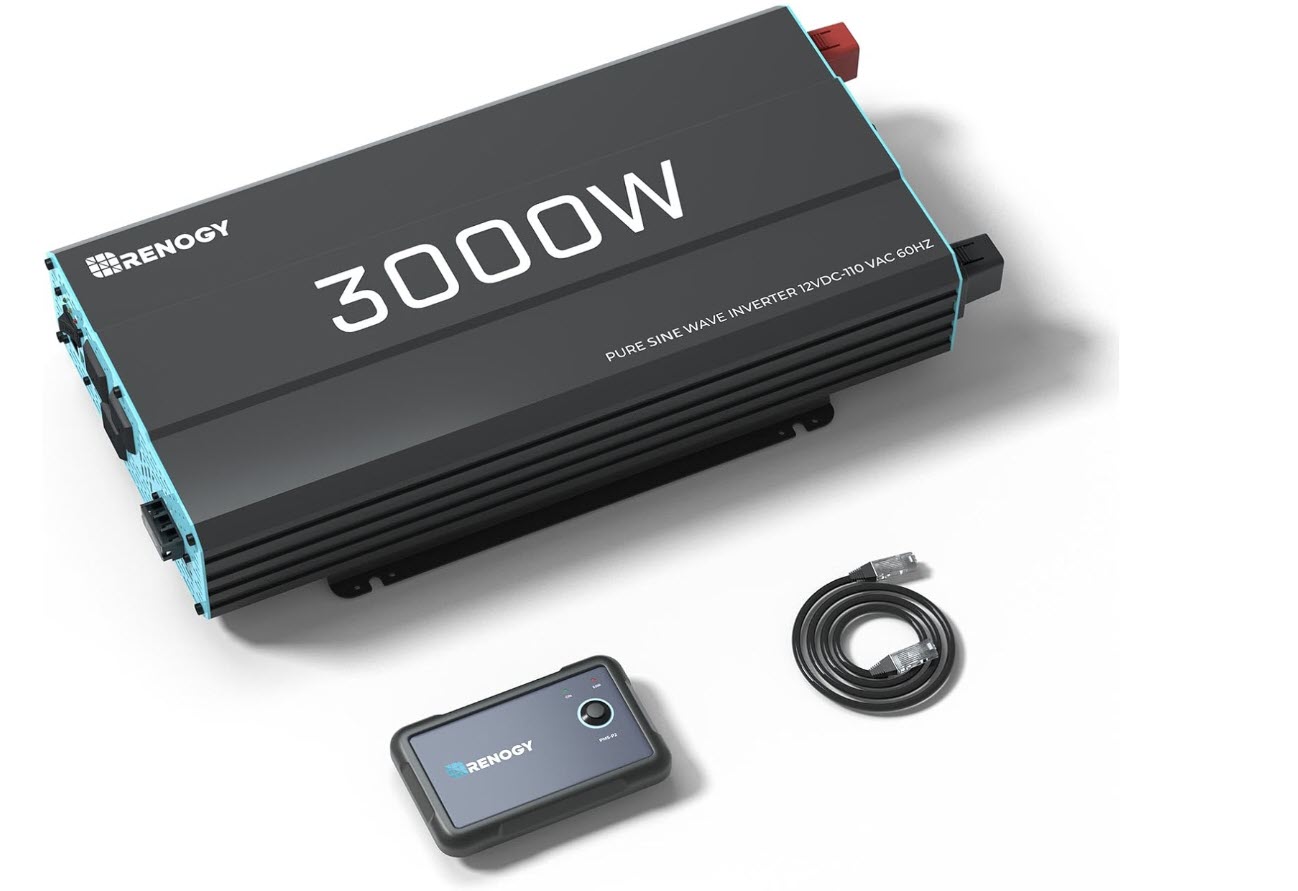
- Residential refrigerators – these are compressor models that can be purchased at Home Depot and other retailers. They are relatively inexpensive, BUT, in an RV Camper, unless you’re connected to shore power OR running off a generator, they require an INVERTER. One of the inverters I recommend most to my Concierge RV Clients is the 3000 watt, pure sine wave Renogy. Pure sine wave function is important, especially for sensitive electronics including your laptop. A 3000 watt inverter can simultaneously serve your refrigerator, charge your laptop, run your TV and *perhaps* even run the microwave (for a few minutes.) Running a residential fridge along with an inverter requires the most power of these three designs.
Between the three, I’ll take the gas absorption fridge – as long as it doesn’t act up! As a side note – a concerning trend in SOME RV Campers is the trend away from propane. I see propane as an advantage! A BIG advantage. In addition to running my gas absorption fridge, my furnace can run on propane. It of course serves as my heat source in a power failure.
Winter is approaching and HEAT is IMPORTANT across most of the nation
I like my bedroom to be chilly overnight, but there ARE limits! I do not like waking up to a bedroom in the 40’s (or colder!) So… HEAT is necessary in your camper. Heat will also (depending upon the design of your camper) keep the plumbing and tanks from freezing.
My local RV tech doesn’t believe me, but I have camped in temperatures as low as -40F. That was in Anaconda, Montana for two mornings in January 2023. And for Anaconda, that was an unusually SHORT cold spell! I’ve experienced several nights at -30 to -35F while camping in Steamboat Springs, Colorado several winters back.
In both instances, I came out of it fine – but – I did burn LOTS of propane to prevent a disaster! Where I currently am, that kind of cold is very rare, though not unheard of.
Even if you’re RV is located in Central Florida, you may awaken to a few mornings in the low 20’s. That is cold enough to create havoc in your camper. Your propane driven furnace is your KEY to handling these conditions.
When I have wintered in places like Anaconda or Steamboat Springs, I rented a 120 gallon propane tank and set it next to my camper. These large tanks provide peace of mind, far more than the two 7 gallon tanks that come with many trailers or the (still) limited supply in a motorhome.
Whether or not to get a large propane tank is your call. There is a significant upfront cost, but the benefit (beyond peace of mind) is the fact that you’ll pay less per gallon to fill it than you’ll pay to fill your 7 (or 5) gallon bottles at the local fuel station or ACE hardware.
Additional important considerations – Lighting and Internet (Connectivity)
Your RV’s lights (if its less than about 15 years old) are likely LED’s. LED lights are very energy efficient. This will enable you to (within reason) keep the lights on in your camper once the power goes out.
It is also important to maintain contact with the outside world. A power outage may cause your local cell towers to go down. I recently added Starlink. With Starlink, you’re not going to be relying upon a cell tower to make calls. In addition to internet, Starlink will support internet calling. The reason for Starlink other than its lightning fast – and now affordable? The satellites will not be impacted by regional or more widespread power outages. I have a code HERE that can save you $100. on your initial order.
Medicare for RV Travelers – An approach that works…
As a traveler, especially one who has had some heart issues and occasional skin cancer, I need access to the doctors of MY choice. I’ve found a program that is NOT medicare “advantage” that I personally use and HIGHLY recommend. I wrote an article recently that discusses Medicare and a Medigap Plan that IS affordable and works for RV Travelers.
Powering your RV Camper when there is no “shore power”
Shore power is the term often used that refers to 120 volt AC current. That’s what you’re plugging into at a power pedestal in a campground. If shore power is not available, you need something to charge your energy storage center (your RV’s batteries.)
Commonly, this is done with either solar panels OR a generator. I have both – but – BUDGET versions of each. For solar panels, I use a portable solar suitcase. My personal solar suitcase that is “ready for use” is the Renogy Solar Suitcase. It provides 200 watts of power and includes a 20 Amp solar controller. You simply attach it to your batteries terminals (and it comes with alligator clips.)
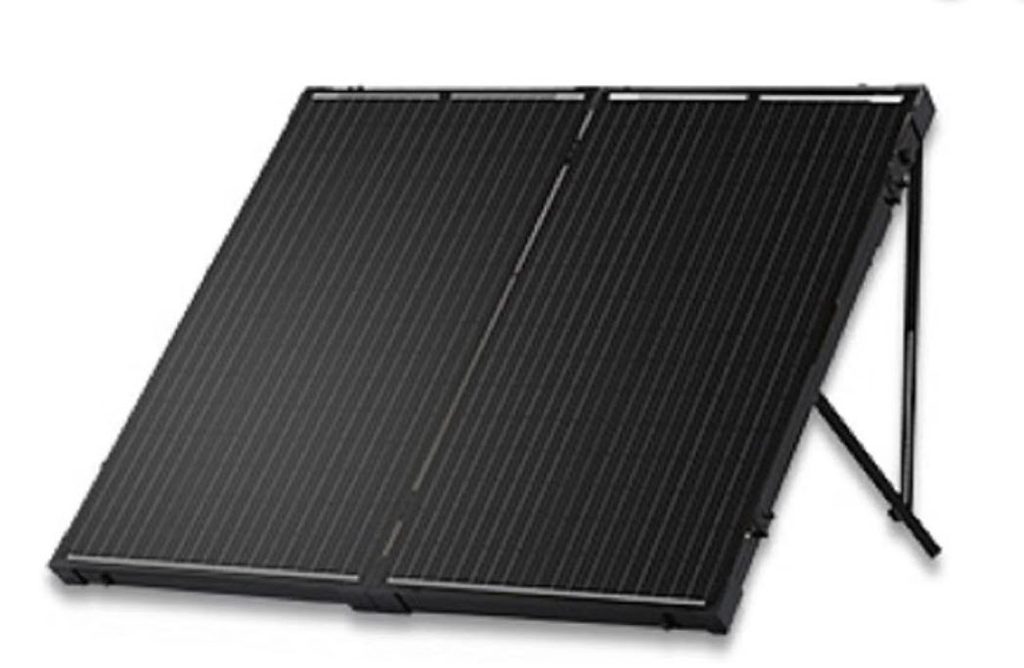
There are more powerful and lighter solar panels, but they do not come with the solar controller so you’d need to wire that in and add fuses in the necessary locations. I’m considering that down the road, but for now, this solar suitcase is sufficient. In the summer, I can receive over 100 amp-hours each day. In the winter, having the ability to track the sun (move it as the sun moves), you can optimize its ability to absorb solar energy.
Generators
One advantage to toy haulers and motorhomes is the ability to travel with enough propane or gasoline or diesel to run the generator for a protracted period of time. The generator of choice for these campers is the Onan. They typically cost thousands of dollars (well over $6000.) and mount permanently as they are bulky and quite heavy.
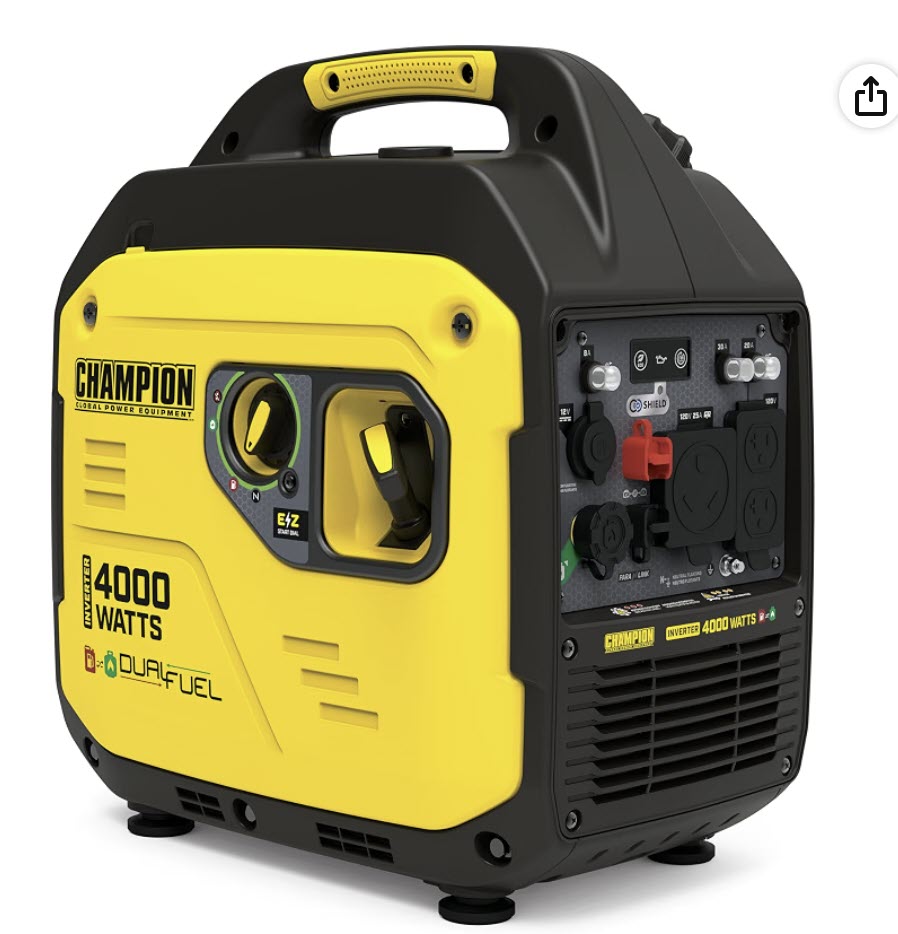
Here is a FAR better alternative that I’m recommending for the first time as it is a BREAKTHROUGH in inexpensive generators! What’s the big deal? This 4000 watt Dual-Fuel Champion generator weighs just 51 pounds. It is the FIRST time I’m seeing a 4000 watt that weighs less than 80 pounds.
Currently I have a 2500 watt dual fuel. To run an air conditioner, I’d need two and a parallel kit. This 4000 watt model (for about $739 currently on Amazon) WILL run an air conditioner and some reviewers claim it can run two. (I doubt those claims.)
Dual fuel means gasoline and propane. Nice to have to extend its use in case gasoline is temporarily unavailable (due to a power outage.) Admittedly, if a power outage were to last more than a few days, this generator might become a paperweight, but for the price, I believe it is worth owning. It is also compact so it is easily stored under your camper.
Concluding Thoughts
A power outage that lasts for a matter of hours or a few days is easily manageable with minimal inconvenience if you employ the approaches I’ve detailed here. If the power outage were to last longer, solar panels become all the more important and you need to consider this possibility by carrying emergency food (dehydrated and canned.) I personally believe we live in UNprecedented times. I’d rather be prepared than caught flat-footed if the power goes out!
Oh and I’m wrapping up this post on November 21… the power is still ON. I guess Lisa Simpson was WRONG on this prediction… or did she mean 6 days before Thanksgiving 2027?
I welcome your thoughts in the space below AND if you’d like to be notified of upcoming posts, please join my free newsletter below…